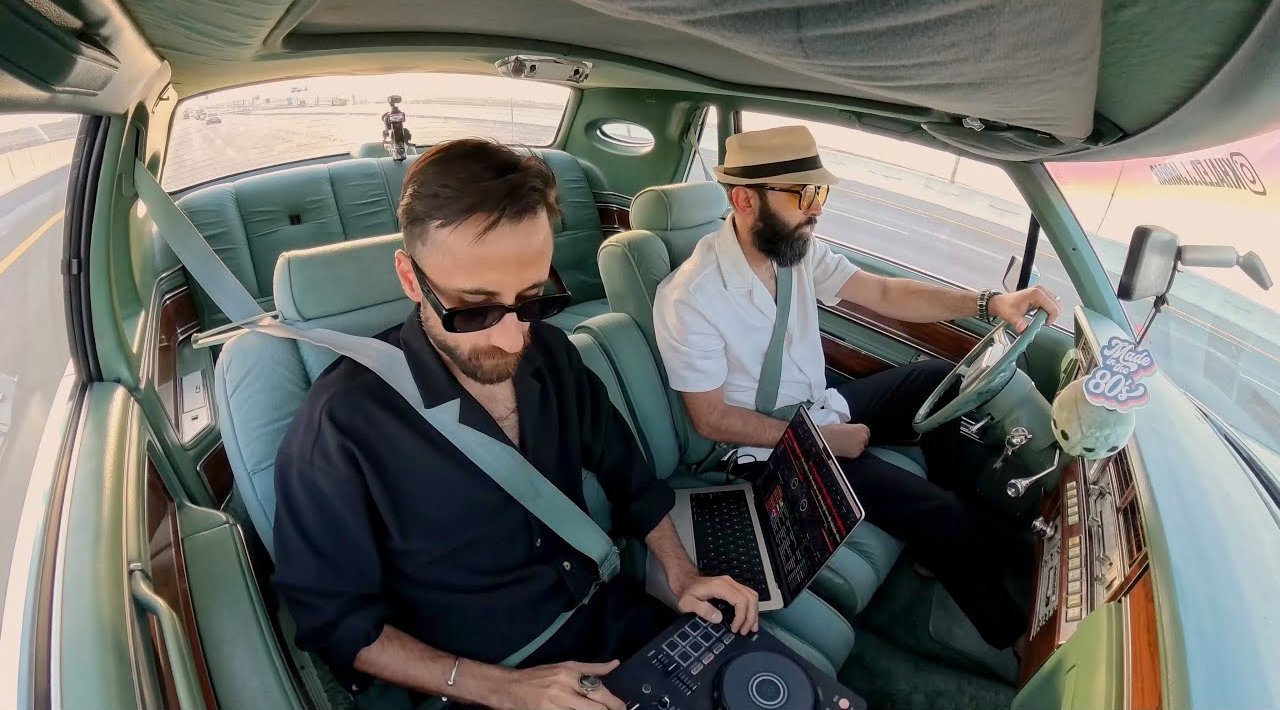

There is a version of Bekta’s story that would be easy to flatten into a single sentence: a Persian-born DJ and musician who left for Dubai and found freedom. The truth, as he tells it, is more specific than that – and far more interesting.
Before Dubai, there was a different kind of room: unmarked, temporary, built in secret. In Iran, gathering to listen to music carried real risk. Bekta didn’t come up in a scene with an industry behind it. He taught himself on guitar, studying heavy metal bands, before discovering electronic music and what a DJ could do with nothing but sound and presence.
That risk still shapes how he builds a track today – though not in any way you’d expect. His latest EP, “Human Technology” (Rolling Music Records), is the clearest example yet, and the reaction from listeners surprised even him.
In this conversation, Bekta talks about what it actually meant to make music under restriction, what changed when that restriction lifted, and why he refuses to let his history become a marketing angle – even as he insists it’s the actual material of his work. Read on.
You started producing electronic music inside Iran, where the scene exists under real limitations. What did making music under those conditions actually look like day to day — what did you have to work around?
People imagine the limitations as one big dramatic wall, but day to day it was a hundred small calculations. Where can we gather, who do we trust, how do we move equipment without drawing attention, how loud is too loud, which spaces are safe this month and more than anything, who do we know who can help us do it safely. The risk was always real: not just losing all our equipment, but being arrested for something as simple as a private party, even a birthday celebration. What that environment taught me is that music was never casual for us. Every event was fragile, so every event mattered. When the freedom to gather and listen is not guaranteed, you stop treating sound as entertainment. It becomes a room you build for people to feel emotions they cannot feel anywhere else and that understanding of what sound is for has never left me. Everything I make now still starts from that.
Was there a specific moment you decided this was going to be your path, despite those limitations?
Music moved me long before I understood why. As a kid, the musicians we saw on TV were a kind of identity — my friends and I would debate them for hours, as if the artists you listened to were proof of who you were. But I never imagined becoming a musician, because in Iran there was no real industry to point to — no one I could look at and think, “I will build a life from this.” It felt like a fantasy, so for years it stayed a hobby. My first instrument was the guitar, and my education was heavy metal: Metallica, Tool — years of studying how they build rhythm, story, and tension.
The moment came when I discovered electronic music and saw what DJs like Tiësto and Armin van Buuren could do — move thousands of people with nothing but sound and presence. To me it was suddenly simple: if they can do it, then all I need to do is create something people love to listen to. But underneath that ambition was something deeper. This wasn’t a hobby I was defending; it was the one place where I was completely free. Outside, so much of life was defined by what was not allowed. Inside the music, nothing was forbidden. And music unites people — which is exactly why gatherings like ours were forbidden, especially at the beginning of my journey. Once you have felt that freedom, you cannot choose a different life. The decision made itself; I just agreed to it.
Your music sits between something melodic and familiar and something more improvised and evolving. Is that tension something you chase deliberately, or did it emerge from how you had to work?
Honestly, both. It emerged first and became deliberate later. The melodic, familiar side is memory: I carry melodies from where I come from, from what I grew up hearing, and they surface whether I invite them or not. The improvised, evolving side is displacement: when your life keeps moving between cities and cultures, you learn to build structures that can change shape without collapsing. For years I did this instinctively. Now it’s the center of my research — I’m fascinated by how a familiar fragment inside an unfamiliar progression makes people feel recognized, as if the music knows something about them. That tension between what we remember and what keeps moving is, I think, the honest sound of a migrant life.
Walk us through how “Human Technology” actually came together — where did that familiar melodic theme come from, and how did the improvised progression take shape around it?
It started with a melody I remembered from a trance anthem of the late 1990s — one of those tracks a whole generation carries in the back of their minds without ever knowing its name. I didn’t want to sample it or cover it. I wanted to rebuild it the way memory actually works: imperfect, transformed, more feeling than fact, in my own language as a producer. So I reconstructed it from what I remembered rather than from the recording, and then let the progression grow around it through improvisation — the way a memory changes shape every time you revisit it. The result sits in a strange and beautiful place: listeners feel they already know the song, but they can’t place it, and that not-quite-recognition pulls them forward. I was deliberately producing what psychologists call involuntary memory — a feeling that arrives before you understand why. That experiment changed how I think about everything I make now.
What surprised you about how listeners responded to it?
How personal it got, and how fast. People didn’t say “nice track” — they told me their stories. One person told me: “I used to hear something like this on the radio on the way home from school when I was a kid. I never even knew the name of that song.” Another described it as opening a lost memory in their brain, and said that feeling is why they keep coming back to it, listening over and over. What surprised me most is that people from completely different backgrounds — different countries, different generations — were each convinced the track was somehow about their past. That taught me something I’m still processing: the melody came from my memory, but the feeling of remembering is universal. You don’t need to share someone’s culture to share their nostalgia. That realization is what pushed my work in the direction it’s going now: sound as a way of holding memory that words cannot reach.
What changed for you, practically and creatively, once you relocated to Dubai?
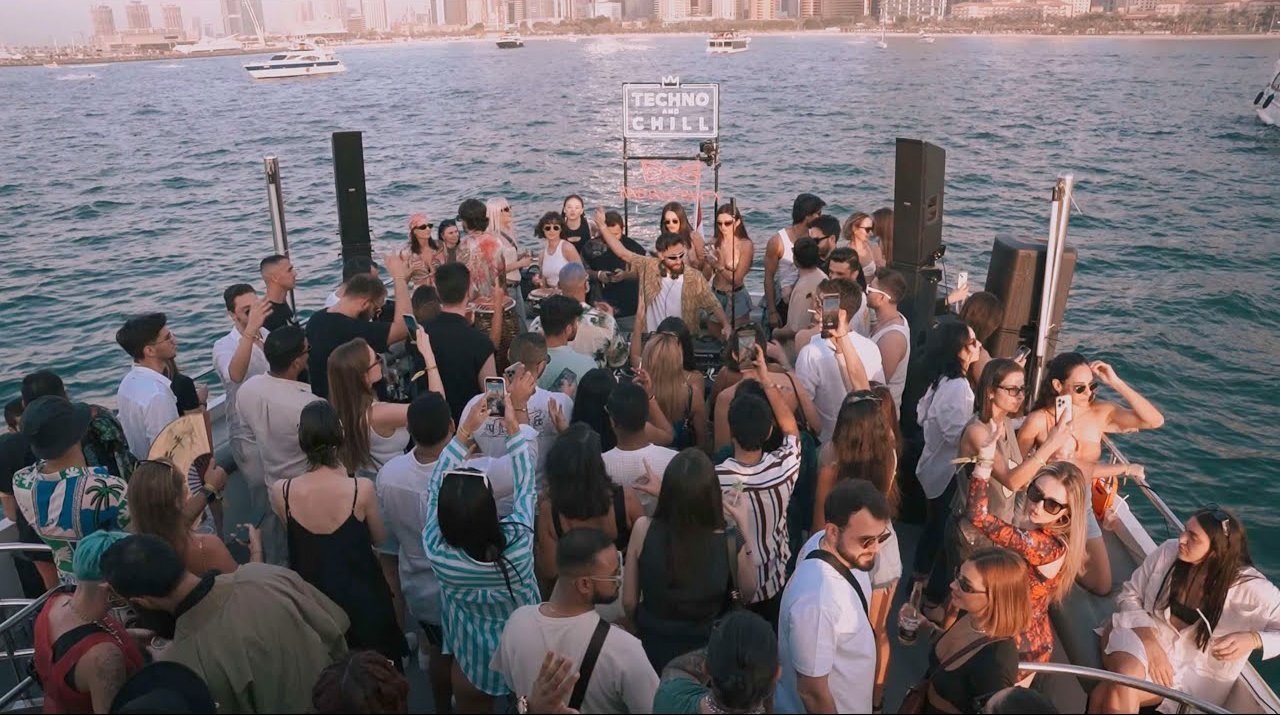
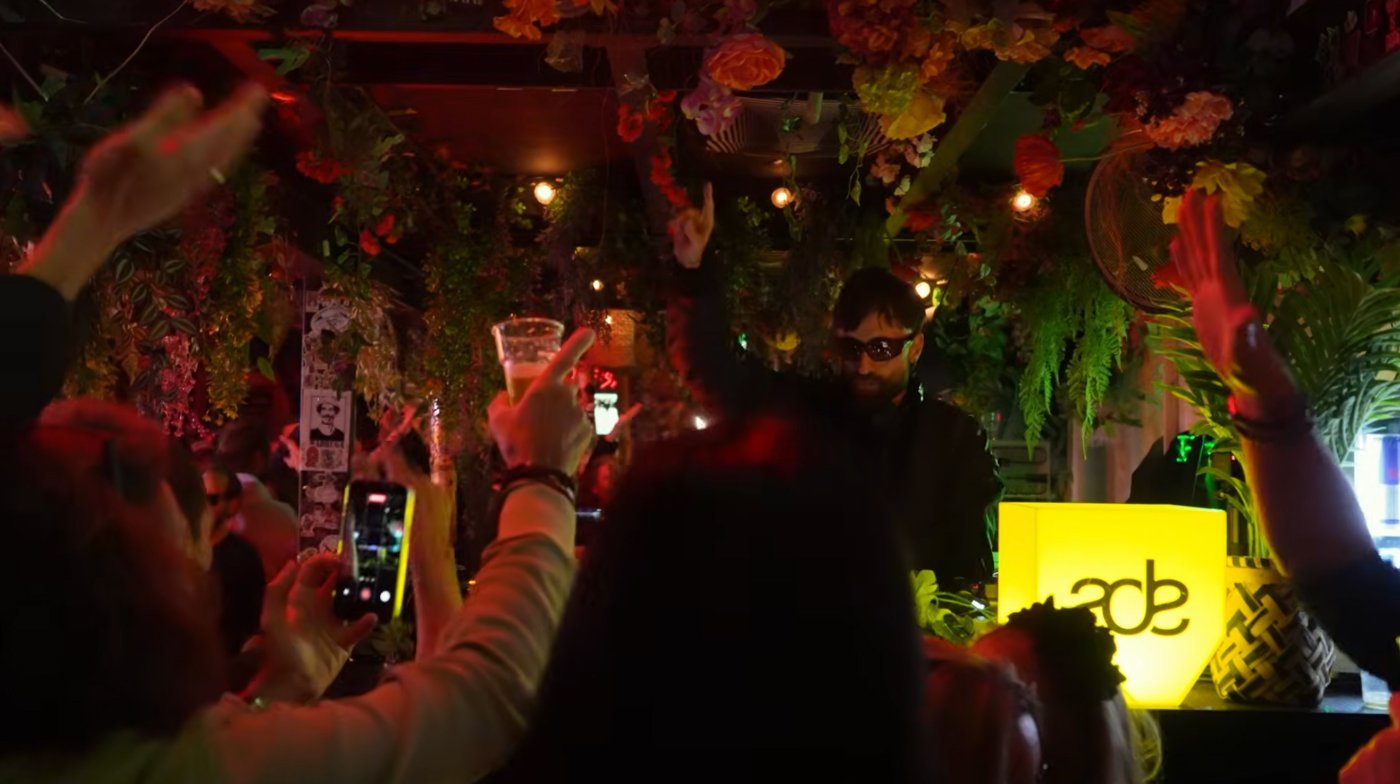
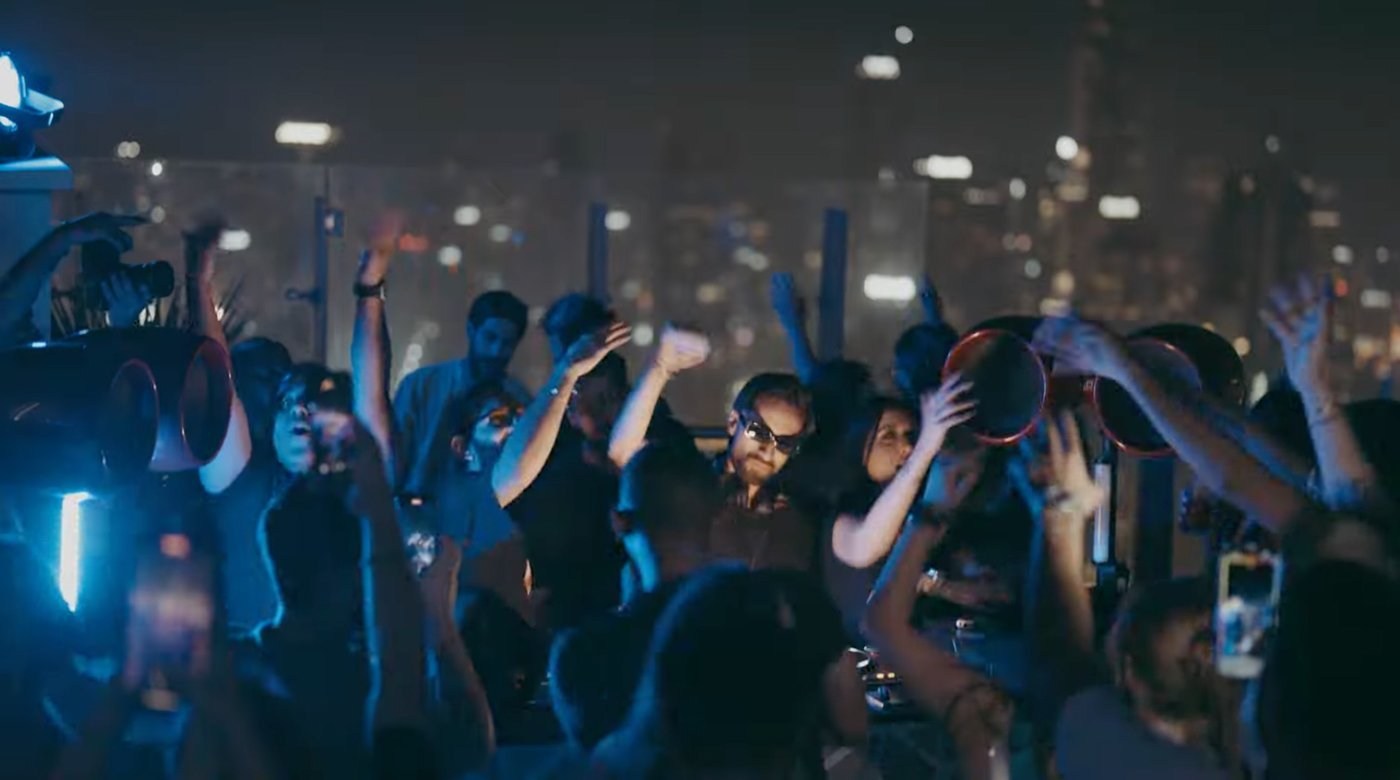
Practically, almost everything opened: I could perform publicly, release properly, build an identity with the Rolling Music label, and play internationally. To work legally as an artist — to create and share expression across different cultures, freely, as a profession — is something many people take for granted. For me it was a gift. I love watching people have a good time and exchanging that energy with them. I’m here to elevate your night with music you’ve never heard before.
But the creative change was deeper, and less expected. Dubai is a city where nearly everyone is from somewhere else. Every person I met was living between a remembered home and a constructed one, carrying their displacement differently — some lightly, some heavily. I recognized my own experience multiplied by millions. That changed what I wanted my music to do. In Iran, sound had been my private space of freedom and survival. In Dubai, I began to understand it could be a shared space — a place where people who can’t speak each other’s languages can still recognize each other’s memories. That’s when my work started moving beyond the club.
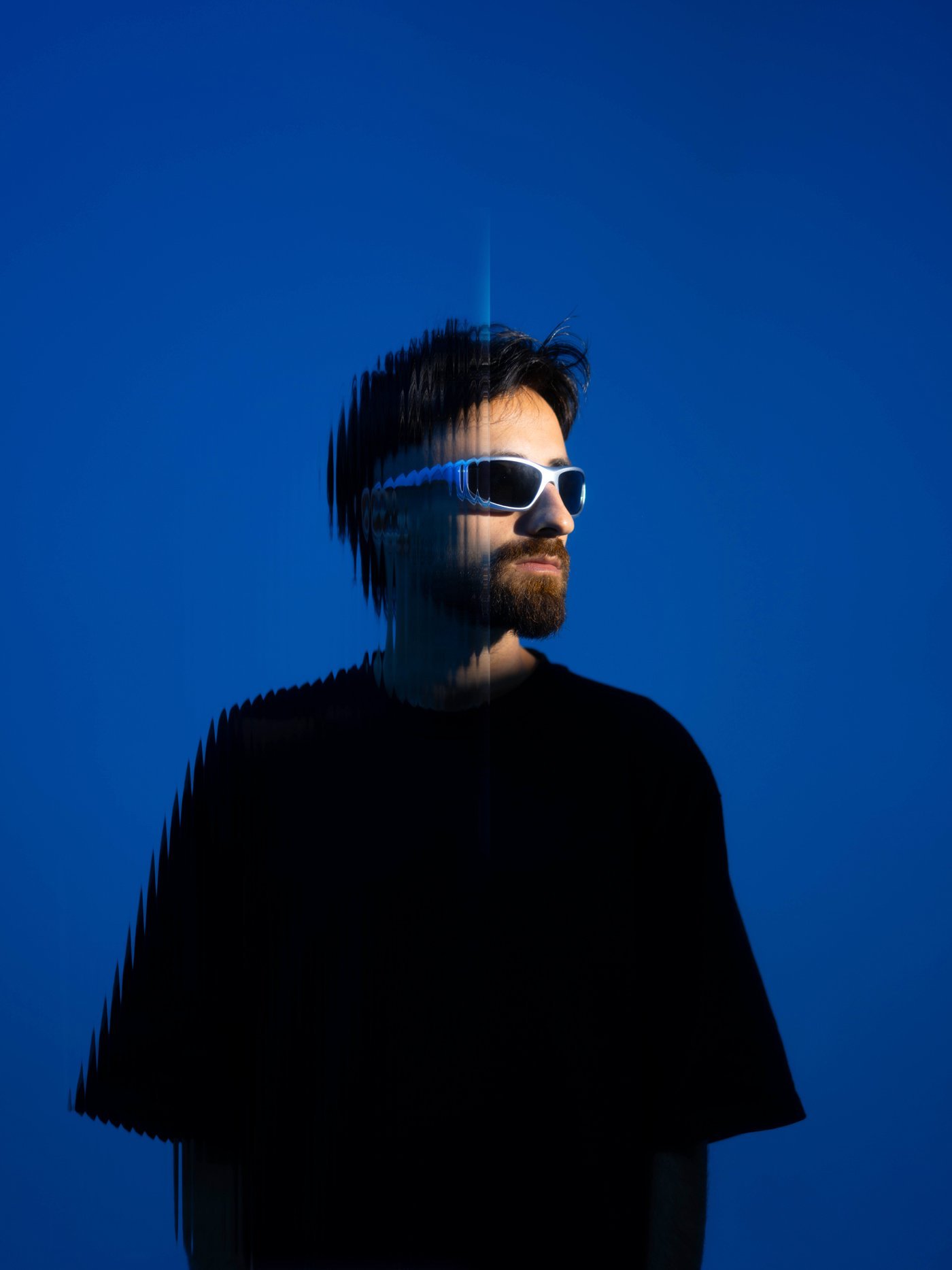
Do you feel a responsibility, or even a pull, to represent the “Middle East artist” story when you perform internationally — or is that a narrative other people put on you more than one you claim yourself?
I hold it carefully. I will not perform an identity as a brand — the “exotic artist from a difficult place” framing flattens something that is actually lived, complicated, and still ongoing for many people. But I also refuse to erase where I come from, because my history isn’t a marketing angle; it’s the literal material of my work. The melodies I carry, the way I understand what music is for, my relationship to freedom — all of it comes from that journey. So my answer is: I don’t represent “the Middle East artist story.” I represent one specific, true story: mine, told honestly through sound. And I’ve learned that the more specific and honest I am, the more universally people connect to it. Specificity, not representation, is my responsibility.
What’s next — for the sound, and for how you want to be positioned within this regional-to-global story?
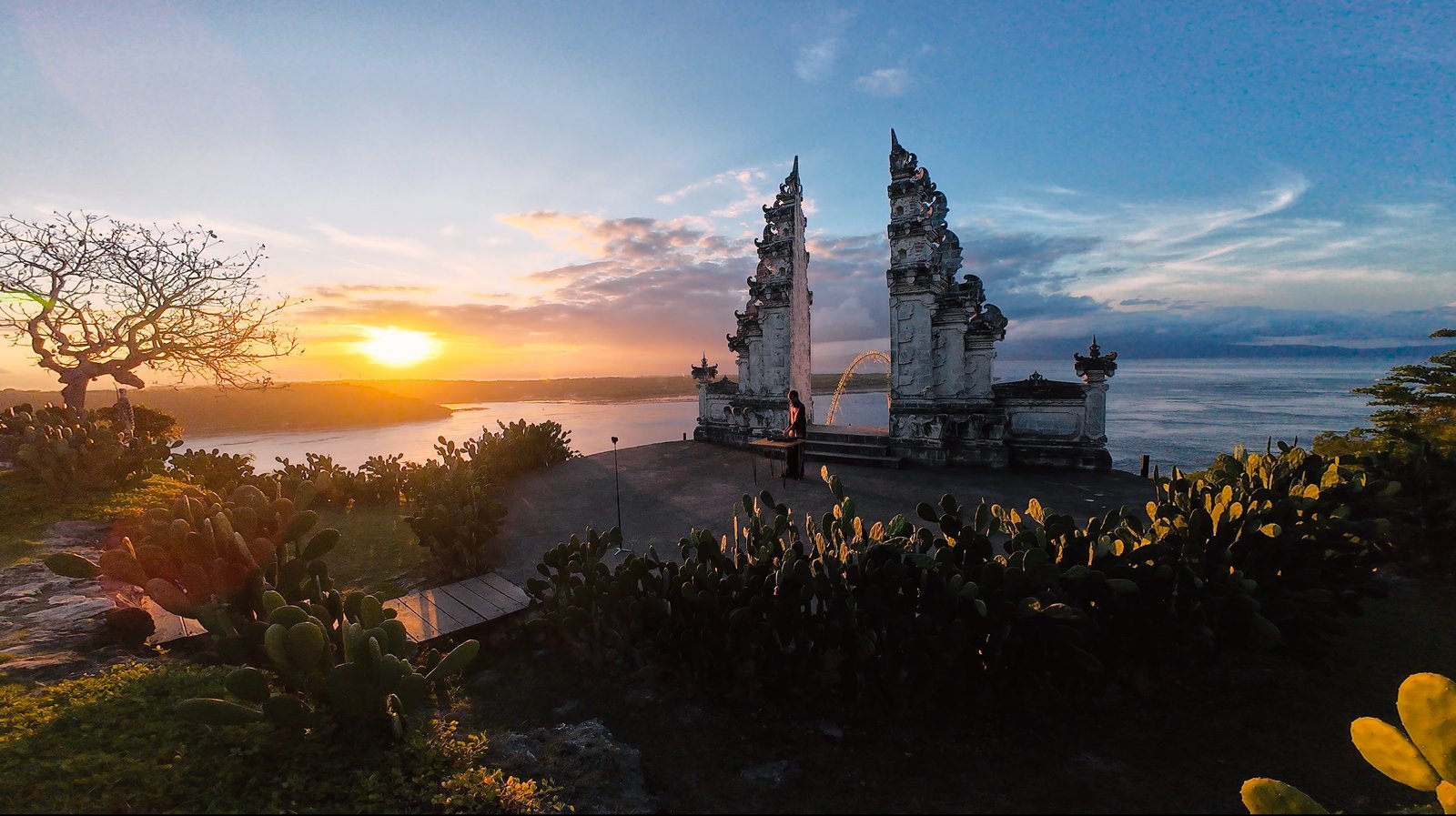
The next chapter is the most intentional of my life. I’m developing a body of work that treats sound as an archive of displaced memory — combining field recordings, reconstructed melodies, and recorded voices of people who carry migration in their history, composed into immersive audiovisual performance. It grows directly out of “Human Technology”, and out of experiments like performing inside the art installation “Circle of Trust” — an urban art project created by the artist MOEY (moey.studio), who invited me to perform in direct dialogue with his work, where I studied how sound and visual art together change what an audience feels. I’m taking this research toward contemporary art spaces and residencies, moving between the club and the gallery rather than choosing one. As for positioning: I want to be understood as an artist whose medium is electronic sound and whose subject is memory, displacement, and human connection. If my path from Iran’s underground to international stages proves anything, it’s that sound crosses borders more freely than people can — and I want my work to be a document of that.