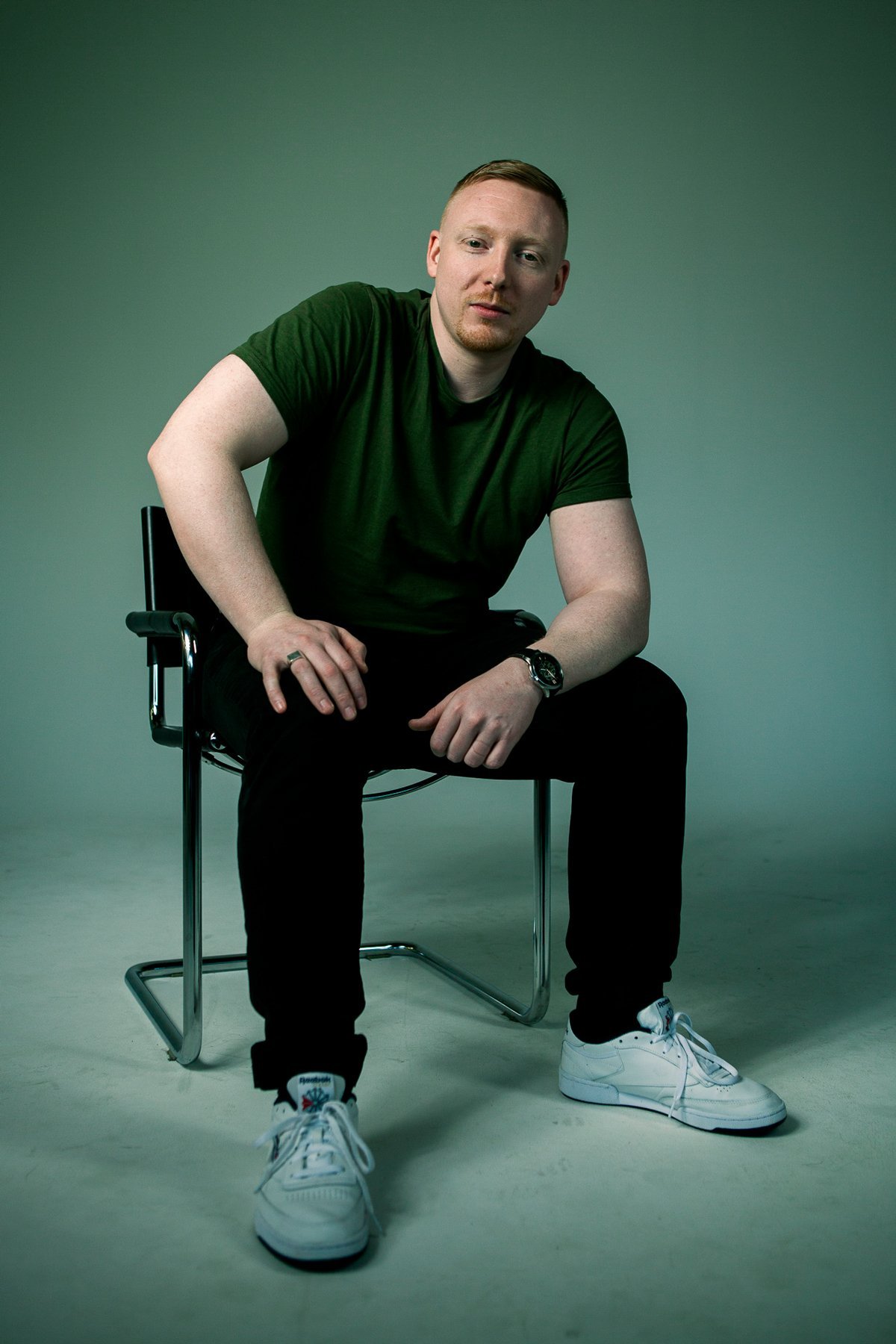

Calm, precise, and deeply process-oriented, Gabor ZEZE moves with intention. Based in Basel, he builds his sound through live hardware jams, clear limitations, and a steady trust in groove. There is no rush in his approach. Earlier this year, he brought that mindset to the Sihl x Plazma In-Store session in Zurich, presenting a live set that felt focused, controlled, and quietly powerful.
April 7th marks the arrival of his debut EP on Plazma, Organic, our first release of the year. It introduces a refined, minimal energy into the catalogue — spacious, measured, and subtly confident, arriving just as the season begins to shift.
In this conversation, Gabor speaks openly about his workflow, from Digitakt and Digitone jams to final arrangements in Ableton, about shaping live sets as evolving narratives, and about why trusting the process matters more than chasing validation. There’s plenty here for aspiring producers and live performers, not just in terms of gear and technique, but mindset.
If you’re interested in what happens when technical discipline meets emotional awareness, read on.
What was the first experience or moment in your life that made you fall in love with music, even before you decided to pursue it professionally?
This goes back to my childhood. My father used to listen to jazz on his vinyl record player. Records by legends like Miles Davis and John Coltrane always gave me a warm, comforting feeling.
When did electronic music first catch your attention? Was there a specific track, DJ, or moment that opened your ears to this genre?
This was during my teenage years, when I first discovered nightclubs. I was deeply impressed by the feeling house music created on large sound systems. The culture around it also struck me, everyone was just dancing, and it did not matter who you were.
Do you remember the moment when making music shifted from listening and collecting to actually producing your own sounds?
Over time, I became increasingly drawn to house music. When I was 25, a conversation with my brother marked a turning point. We realised that we could create electronic music ourselves, shaped by our own taste and feeling. That was when we decided to get a groovebox and start producing our own sounds.
What role does your hometown of Basel [Switzerland] play in your music if any? Do you feel a connection between the city’s energy and your sound?
My circle of friends in Basel had a strong influence on my music. Many of them are DJs and producers, and being surrounded by this scene clearly shaped my sound and motivation.
How has your personal journey and experiences influenced your music, and how do you express your individuality through your sound?
I see my music as a snapshot of who I am. It is a way to express both past and present life experiences, shaped by my evolving taste and the sounds of my everyday environment, which I absorb and transform into my own musical language.
When you’re producing music in the studio, do you think in terms of conveying something — a feeling, an idea, or even a story — or is the focus more on sound and structure itself?
When I produce music, I let myself be guided by my feelings and by inspiration drawn from life and other great artists. It is a meditative process for me, more a journey of exploration than a clearly defined path. In the end, it naturally comes together and tells my story.
How do groove, emotion, and restraint interact in your current work, and has that balance shifted over time?
Groove and emotion are closely connected in my current work. The groove often adapts to my life circumstances and even to the seasons, which naturally shifts the balance over time.
Walk us through your typical creative process when producing a new track. How do you start, and how do you know when a piece of music is complete?
It usually starts outside the studio, through inspiration from music or other forms of art such as painting. In the studio, I translate these impressions into a live set. I work with different ideas on my sampler and synthesizers, exploring them in a performative way.
My live setup is very flexible but also gives me clear limitations, which makes it an ideal environment to shape ideas. A live set usually contains around 16 different tracks. Once the set feels complete, I select the tracks that resonate with me most on an emotional level.
I then record these tracks into Ableton, build the arrangement, and work on the mix. After that, I test them in different contexts. I play them in my DJ sets, listen to them on headphones, and repeatedly return to the DAW.
A track is finished when it feels complete to me, when nothing seems missing, and when it makes sense as a whole while conveying its emotion and story. It is less a matter of knowing that a piece is finished, and more a subjective conviction that it has reached its final form.
What are your go-to music production tools and instruments?
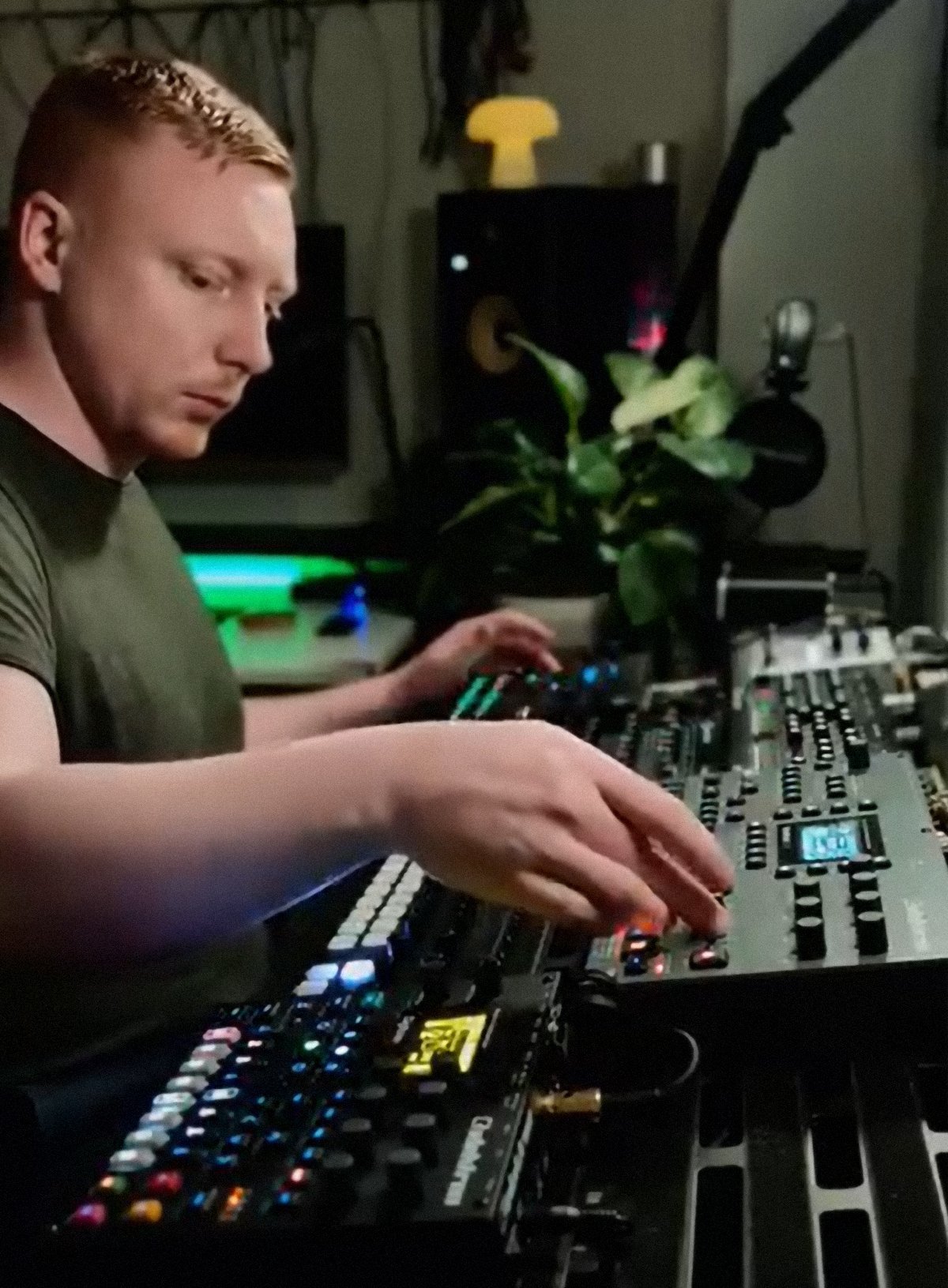
My go-to tools are the Digitakt for sampling and the Digitone for synth sounds during the jamming process. I know these machines very well, and they allow for a fluid, intuitive workflow where I can let myself drift creatively.
In the later stages, especially arrangement and mixing, Ableton plays an important role. I use very few plugins, but I know them in depth.
How do you deal with creative blocks or periods where nothing seems to move forward?
When I face creative blocks, I focus on finding new inspiration and sometimes experiment with unconventional ideas, without the expectation that they need to lead anywhere specific. Overall, I trust the process and stay patient, allowing ideas to emerge naturally over time.
Who are some of your biggest artistic influences, both within and outside the music industry? How have they shaped your approach to creating music?
Jazz musicians like Miles Davis, John Coltrane, and Bill Evans are daily sources of inspiration for me. I am also strongly influenced by Senegalese music, especially groups like Orchestra Baobab, with their sense of groove and musical depth.
Within electronic music, artists from the minimal house spectrum such as Silat Beksi, Staniz, Swoy, Legit Trip and Arkady Antsyrev have shaped my approach. In addition, local DJs and their sets have had a strong influence on me, especially through how they build flow, tension, and atmosphere over time.
You describe your work as rooted in Minimal House. What does that term mean to you personally in the context of your productions?
For me, minimal house is a very broad term and a large subgenre. Its common ground lies in a focus on simplicity, restraint, and exploration. At the same time, it represents openness and a sense of boundlessness in sound design.
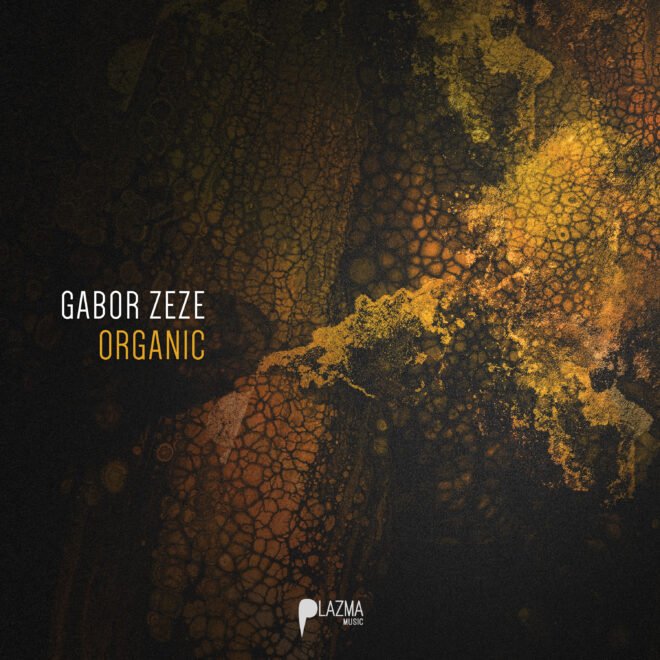

Your upcoming debut EP Organic on Plazma grew out of a live set originally performed for Sihl x Plazma In-store. What made you want to translate that live moment into a recorded release?
As I explained earlier, this reflects my natural creative process. The live performance at the Plazma event allowed me to bring my pieces onto a stage in a performative way. Afterward, I felt that the strongest moments from that set deserved to be preserved and brought together in an EP.
What does this release represent for you personally at this moment in your journey?
It represents an important moment in my journey. It reflects a phase where my sound, workflow, and artistic identity feel more focused and mature. This EP captures where I am right now, both musically and personally.
Can you tell us about your DJ debut? Where did it happen and how did it unfold?
My DJ debut took place a few years ago in an underground club in Basel called Nebel. Together with friends, we organised a party there. The atmosphere was intense and the vibe that night left a strong and lasting impression on me.
How do you usually prepare before a gig? How much space do you leave for improvisation in your sets?
My live sets require a lot of preparation. My goal is to find the ideal balance between carefully curated sounds and improvisation in the moment. This balance is constantly evolving and changing.
When it comes to my DJ sets, I let myself be guided by the atmosphere in the room and respond to it intuitively. I draw from my collection of tracks and try to contribute to the overall energy, focusing on the balance between creating a vibe and capturing the one that is already there.
View this post on Instagram
What is your standard or most preferred technical setup for the performance?
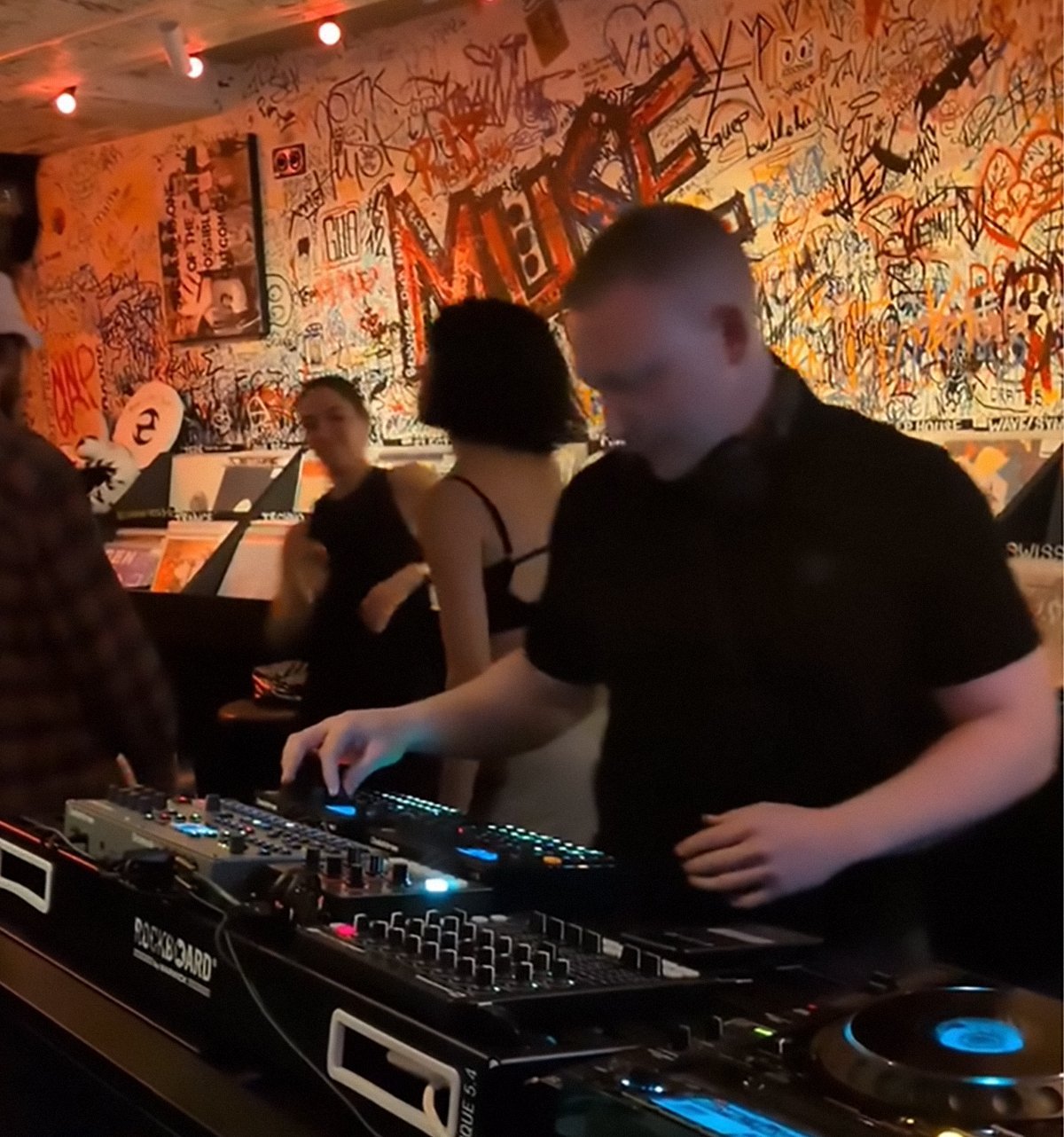
For my live set, I use the Digitakt and Digitone, sequenced by the Oxi One. Everything is curated through my analogue mixer, the Elara 4. For transitions, I use the Blackbox as a looping tool. At the end of the chain, the OTO Boum acts as my mastering unit, adding analogue compression and cohesion to the overall sound.
For my DJ sets, I prefer to play on Pioneer DJ equipment, as this is what I learned on and it remains the club standard.
You approach live performances as stories unfolding in real time. What elements help you sense where the story should go next during a set?
Part of it is prepared, especially the rhythmic foundation, which I can subtly modify or shape through mutes and unmutes to create tension. The rest emerges through experimentation, where I allow myself to drift and let the moment guide the direction of the set.
You took part in the Sihl x Plazma In-Store session in Zurich. How did the experience unfold for you?
It was a very positive experience. The environment at Sihl Records is genuinely music-focused and offers a strong platform to present music in an intimate setting. The feedback from the audience was very meaningful to me and gave me a lot in return.
Did the intimacy of the space change the way you approached selection, pacing, or interaction with your setup?
Yes, very much so. It felt like playing for an attentive audience that understands the difference between a live set and a DJ set. Often, people assume I am simply playing records when I perform live, which was not the case here. The short interview with Oscar at the beginning also gave me the opportunity to explain the idea, structure, and functionality of my live setup, which created a more open and focused connection with the audience.
In your opinion, what are some key elements that make a DJ set memorable and leave a lasting impact on the audience?
For me, a memorable DJ set is built on an interesting curation of sounds and a clear sense of narrative. It is the story the set tells, with its highs and lows, that creates a lasting impact on the audience.
The Minimal House / Deep tech music industry has experienced significant growth and changes over the years. From your perspective, how has the industry evolved, and what are some positive or negative aspects you’ve observed throughout your journey as an artist?
From my perspective, new production tools and distribution channels have significantly lowered the entry barriers. This has led to a much greater diversity of artists and music, especially across Europe, which I see as a very positive development.
I also appreciate how the scene has evolved in Zurich, where a strong and curious ecosystem has emerged.
On the other hand, it is unfortunate that this scene is almost non-existent in my hometown of Basel. I think this is closely linked to the local club culture and the expectations of the audience, which makes it harder for such sounds to take root there.
Starting out as a new producer can be daunting. What advice would you give to other aspiring artists who are just beginning their journey in music production?
My advice would be to not focus too much on external success or validation. It is far more important to follow your instinct and your feelings. Making music should be enjoyable and a way to express yourself honestly.
Learning to trust the process is essential. It can already be deeply fulfilling to make music without ever releasing it, as long as it enriches your life. Especially at the beginning, technical aspects can feel blocking. My advice here is simple: you do not need to know or master everything from the start. With consistency and patience, things fall into place step by step through the process itself.
What skills or qualities do you think are essential for building a sustainable life as a producer or DJ?
For me, the most essential qualities are enjoying the process and not letting constant comparison or external pressure take over. Staying grounded, patient, and focused on your own path is key to building something sustainable over time.
What are your goals and aspirations as an artist? Where do you see yourself and your music heading in the future?
My goal is for music to remain a constant companion throughout my life, almost like a personal diary. I want to continue performing live sets and producing tracks that reflect and document the different phases of my life.
Are there any upcoming projects or collaborations that you’re excited about and would like to share with your fans and the audience?
At the moment, I am working on a new live set. I regularly share small excerpts from it on social media. I am really looking forward to performing this set live over the coming summer.